PM the PM
I don't post a lot on the internet. For someone who has spent a decade building products for some of the most social platforms in the world, that's a little awkward to admit.
My wife runs a thriving social media business. She is excellent at it: consistent, creative, magnetic online. We are, in this regard, complete opposites. Opposites attract, go figure.
So when it came time to build my personal brand, I had a problem.
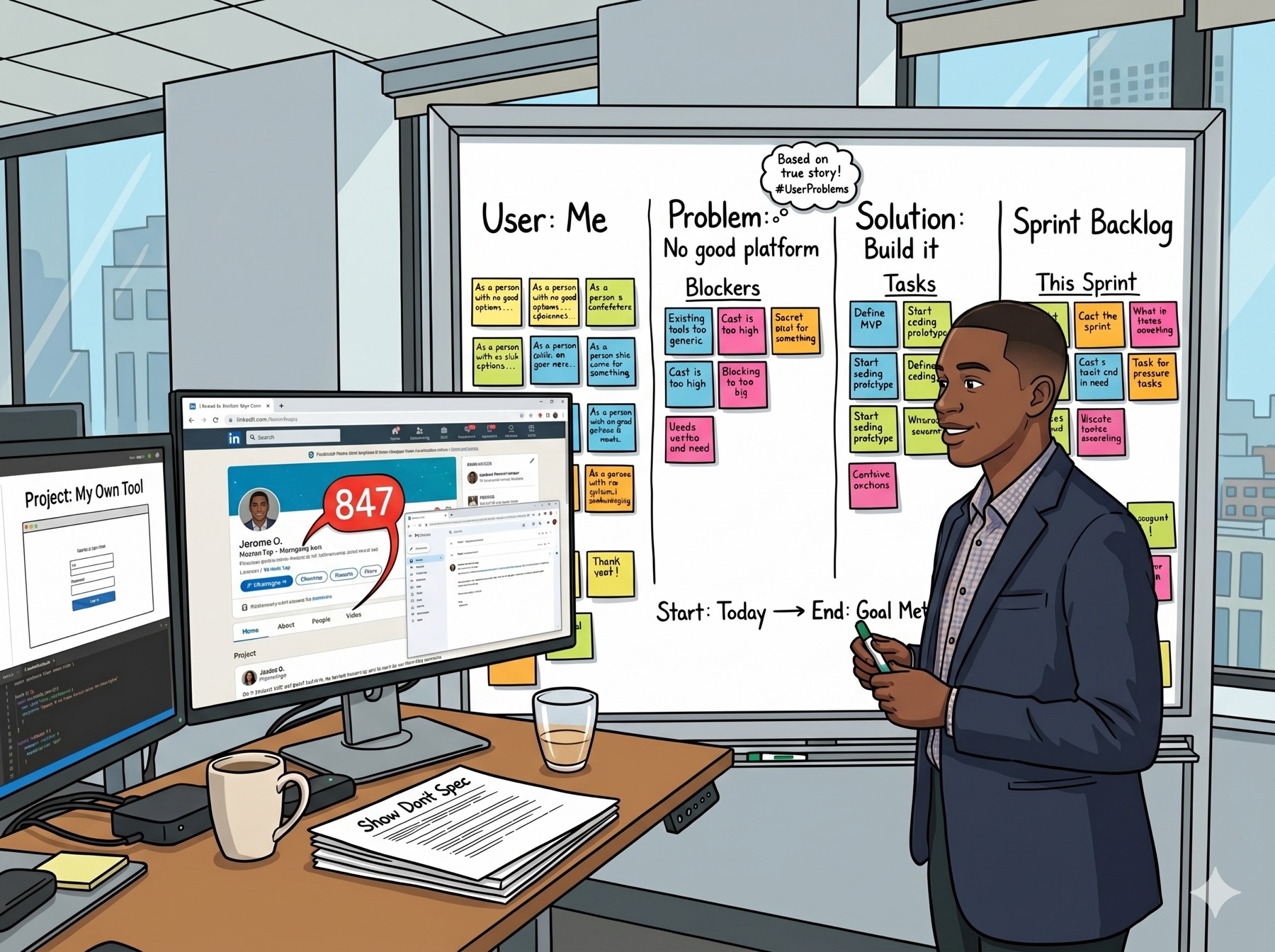
The LinkedIn Problem
LinkedIn is the obvious answer for a Product Manager. It's where the industry lives, where recruiters look, where career narratives get told. I get that.
But every time I tried to make it work for me, something felt off. The platform isn't really designed for personal expression. It's designed for a particular kind of professional performance: the promotion announcement, the humblebragging insight post, the engagement-optimized take. Its formatting and defaults push you toward a certain shape, one that doesn't leave a lot of room to actually sound like yourself.
It started to feel like Instagram's more professionally anxious cousin. And that's not a knock on people who thrive there. It's just not where I thrive.
The Irony of Being a Quiet PM
Here's the thing about being a Product Manager who doesn't talk much on the internet: it looks like you have nothing to say. That's not accurate. I spend my days thinking carefully about user problems, product strategy, and how technology and creativity intersect. I have plenty of thoughts. I just don't have a natural impulse to broadcast them.
What I do have is an impulse to act. When there's a problem I understand, I'd rather solve it than wait for a better option to come along.
So that's what I did.
Building the Answer
I had no development experience. What I did have was a clear picture of what I wanted: a space that reflected how I think and what I've built, on my own terms, without a platform's defaults shaping the narrative for me.
AI made it possible. I used it to build this site from scratch: the design, the structure, the code. It wasn't fast, but it was mine. Every decision was intentional. The case studies, the photography, the writing, all of it an expression of how I actually work and what I actually care about.
In a way, it was the most PM thing I could have done. Identify the problem. Define the requirements. Build the solution. Ship it.
PM the PM.
What I'm Going For
My wife has a line I keep coming back to: better to half-ass something and be consistent than to do nothing at all.
This isn't a half-assed attempt. But her point stands. A presence you maintain is worth more than a perfect profile you never start. Showing up, even imperfectly, is the whole game.
My goal here isn't volume. It's signal. I want the people who find this site, recruiters, collaborators, potential future teammates, to come away with a real sense of who I am and how I think. Not a keyword-optimized summary. Not a list of accomplishments formatted for an algorithm. Just honest, considered work, presented well.
If that leads to a conversation worth having, then the site has done its job.